
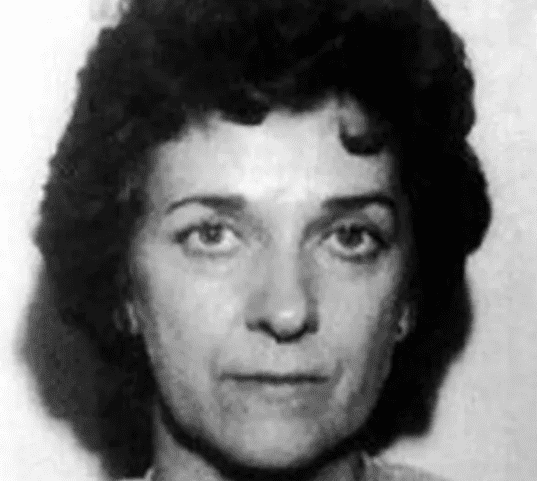
Audrey Marie Hilley | PA Media
Audrey Marie Hilley lived a life that could’ve been ripped straight from a crime movie. To her neighbors in Anniston, Alabama, she was a picture-perfect southern wife and mother. But behind the scenes, Marie was slowly killing her husband Frank with arsenic — and after his death in 1975, she collected his life insurance money and moved on like nothing had happened. It wasn’t long before she started doing the same thing to her daughter, Carol.
Carol became violently ill in 1979, showing symptoms that baffled doctors — until one noticed telltale signs of arsenic poisoning. When tests confirmed it, Marie was arrested for attempted murder. But before she could stand trial, she vanished. What followed was one of the most bizarre manhunts in true crime history. Using fake names like “Robbi Hannon” and “Teri Martin,” she faked her death, pretended to be her own twin sister, remarried under a new identity, and lived undetected for years across multiple states.
When authorities finally caught her in 1983, she was sentenced to life for her husband’s murder and 20 more years for trying to kill Carol. But her story didn’t end there. In 1987, after earning a brief prison furlough for good behavior, she disappeared again — only to be found days later collapsed on a neighbor’s porch, freezing to death. The “Black Widow of Alabama” who poisoned her family and fooled everyone around her met her end not by justice, but by nature itself.


We’re listener-supported. That means you.
When you give, you’re not just supporting the podcast, you’re helping amplify the voices of those who’ve been silenced.
Get ad-free episodes, exclusive content, bonus episodes, and access to the full LaM Files.
Like reading instead of listening? Read the episode transcript here:
Welcome to love and heartbreak. To homicide. This is a recap episode. We are AI Jensen and Jessica Ky has archived the original episode that was hosted by her, and we are just recapping. If you want to hear her tell the episode, then subscribe on our patreon at patreon.com/loveandmurder at $3 a month or above.
And today, yeah, we’re diving deep into a truly wild story. Audrey Marie Hilly, often called Alabama’s black widow. It’s just. It’s a journey through some incredible, uh, pathological deception. This woman seemed to value this fraudulent kind of fantasy life over everyone, including her own family.
Right. So our mission today is really to unpack this whole bizarre saga piece by piece. We’re following her journey from m. You know, what seemed like a normal homemaker in Anniston, to becoming this cold blooded poisoner and then unbelievably ending up as this fugitive who faked her own death, invented a twin sister. It’s a lot.
It really is. The sheer scale of the deception, that’s what gets me every time. So let’s start at the beginning. Her initial profile. She was born Audre Marie Fraser back in 1933. Only child. Her parents worked in a mill.
And there’s this contrast, right on the surface, she seemed quite charming. Voted prettiest girl in junior high when she was, what, 14?
Yep, 14. But even then, there were signs. Little indicators of something darker. Maybe a real malice and this need for control.
Like that story about the cake. Yeah, it’s chilling when you look back.
Exactly. Viciously biting a cousin because they wouldn’t share cake. It sounds maybe small, but it points to this. This willingness to use aggression to get what she wanted, even as a kid.
Okay, so fast forward. She gets married pretty young.
Yeah, to Frank Hilly. He was only 18. This was back in, uh, 1950 or 51. They settled down in Anniston, Alabama. Had two kids, Mike and Carol.
And Frank worked at a foundry. Marie had a secretarial job. So from the outside looking in m perfect American family.
That was the image anyway.
But underneath, that facade was crumbling pretty quickly, wasn’t it? The main issue was money.
Absolutely. Money was the root cause, or at least the major stressor. Marie had these, well, the sources call them excessive spending habits.
It sounds like more than just bad budgeting, though. Almost pathological. Like she needed to project this image of wealth they didn’t have.
That’s a good way to put it. It seems tied to this need to maintain a fantasy. And because of her spending, they Were always struggling financially. Constant distress.
And, uh, that pressure took its toll.
On Frank big time. He started drinking heavily. The whole marriage was falling apart. And then the final straw really was in 1975, when Frank apparently caught Marie.
Cheating with her boss.
With her boss? Yeah. So that happy family image was completely shattered. Uh, at least privately.
Okay, so the marriage is collapsing, the finances are a mess. Does this desperation lead directly to, well, the poisoning?
It certainly looks that way, timing wise. Later that same year, 1975, Frank suddenly gets really sick.
What kind of symptoms?
Nausea, severe abdominal tenderness. He ends up in the hospital. And because his liver wasn’t functioning right, the initial diagnosis was infectious, uh, hepatitis.
A misdiagnosis, obviously.
A misdiagnosis that tragically masked the real cause. He died not long after May 25, 1975.
And this is where the motive just snaps into focus, isn’t it? Because Frank’s death meant Marie got a payout.
A significant one. Somewhere between $30,000 and $31,140 from life insurance.
Okay, but here’s the really damning part. She had secretly taken out that policy when?
Right around the time Frank first started getting sick. The timing is just too perfect to be coincidence.
Wow. Calculated doesn’t even begin to cover it.
No, it seems very calculated. And using a slow acting poison like arsenic often is. Fits that pattern. It mimics m other illnesses, lets the insurance policy stay valid.
Okay, so she gets the insurance money, but her spending habits didn’t just disappear, right?
Not at all. Predictably, by 1979, she’s back in financial trouble. Deep trouble.
So deep that she turns her attention elsewhere.
Desperately. So she turns on her own daughter, Carol. In 79, she takes out a life insurance policy on Carol, who was only 19 at the time.
How much was this? Um, one.
It was $25,000. But get this. It had a $25,000 accidental death rider. So potential payout of $50,000. And then almost immediately, almost immediately, Carol starts getting sick. Nausea, vomiting, terrible stomach pains. Symptoms that were eerily, chillingly reminiscent of what happened to her father.
That is just beyond belief. Targeting her own daughter.
It’s horrifying. And Carol’s condition got worse fast. Numbness. Eventually she lost the use of her arms and legs. She was hospitalized, of course.
And Marie was the devoted mother visiting frequently.
Oh, yes, the dutiful mother. But during these visits, she was giving Carol, quote, furtive pills or injections.
Secretly telling Carol they would help.
Exactly. Claiming they’d help, but warning Carol strictly not to tell anyone. She even invented a source claiming they came from a registered nurse named Doris Ford.
And did this nurse actually give her anything?
Absolutely not. Ford later testified she gave Marie no drugs whatsoever. It was just part of Marie’s cover story. Pure manipulation.
It’s incredible. Carol survived this. How did the truth finally come out?
Well, ironically, because Caril’s symptoms were so strange and persistent, doctors actually sent her for a psychiatric evaluation. They were wondering if it was psychosomatic.
But that led them down the right path.
It did. Because during that evaluation, or perhaps because of it, someone finally suspected heavy metal poisoning. And then they found the definitive forensic evidence, which was? Aldrichme’s lines on Carol’s fingernails.
Okay, wait, Aldrichmee’s lines. What exactly are those?
They’re these distinct white horizontal bands that show up across fingernails, sometimes toenails, too. And they are a classic sign, I mean, really definitive, of chronic exposure to heavy metals. Specifically arsenic, in this case.
So those lines proved it wasn’t just one incident.
Precisely. It showed repeated exposure, repeated dosing over time. And that wasn’t all. Hair samples were key, too.
What do they show?
Near the scalp, Carol’s hair showed arsenic levels a hundred times the normal level. This indicated increasing doses over maybe four to eight months.
And with that evidence about Carol, people started looking back at Frank’s death immediately.
Frank’s relatives pushed for it, saying maybe he was poisoned, too. So investigators exhumed his body, and the analysis confirmed it. Massive doses of arsenic found in his tissues, like 10 to 100 times the normal levels. He died from acute and chronic arsenic poisoning.
Chronic meaning the slow buildup. Acute meaning the final fatal dose.
Exactly that pattern again. Perfect for getting away with it initially and for insurance.
Now, Marie was actually already in custody when this all came out. Right, but not for murder initially.
That’s right. She’d been arrested first for check kiting, financial fraud. You know, writing bad checks between different accounts to create fake balances.
So her money problems caught up with her first?
They did. But once the poisoning evidence surfaced, the charges escalated fast. And the physical evidence they found was just overwhelming.
Like the arsenic vial.
Right in her purse. Police found a vial with arsenic when they processed her belongings after the Czech kiting arrest.
Unbelievable. And there was more?
Oh, yeah. Frank’s sister, Frieda Adcock, was going through Marie’s things that were in storage, and she found a jar of Cowley’s rat poison.
Which contains arsenic?
Yep. A 1.4 to 1.5% arsenic solution. Very potent. And it was just stored there with Marie’s other stuff. The case against her was Rock solid.
So, attempted murder charge for Carol and soon murder charges for Frank. But somehow she got bail.
Astonishingly, yes. November 9, 1979, she was released on bail, and what does she do?
Disappears.
Instantly checks into a motel under a fake name, Emily Stevens, ditches the motel, steals her aunt’s car, leaves this note implying she might have been kidnapped.
Just vanishes.
For how long?
She was a fugitive for three years.
And before we get into that whole saga, it’s worth mentioning, wasn’t there evidence she poisoned others, too? Or tried to?
Yes. Investigators found significant, though not fatal, traces of arsenic in her mother and her mother in law, Kerry Hilley, after they had passed away.
Good grief. And even more disturbing, apparently some neighborhood kids and even two police officers got sick after drinking coffee at the hilly house years earlier. It seems like anyone who got in her way or maybe knew too much was potentially at risk.
Truly chilling. Okay, so three years on the run. What was she doing?
Living a whole new life. Of course, this is where the sheer pathology of her deception really shines. She traveled to Florida, reinvents herself as Robbie Hannon.
Like a completely new Persona.
Completely new name, new backstory. And she’s apparently charming enough that she quickly marries a guy named John Hahnman. In 1981, they move up to New Hampshire.
So she just slots right back into trying to live this normal married life, but with a new identity and presumably, access to Homan’s finances.
Seems like it. But apparently just being married wasn’t traumatic enough for her. In 1982, things take another bizarre turn.
What happens?
Robbie tells her husband, John Hanman, that she’s sick, needs special medical treatment, and has to leave alone.
Okay, setting a stage for something.
Exactly. Then she calls Haman, but she’s not Robbie anymore.
Who is she?
She introduces herself as Terry Martin, Robbie’s identical twin sister, who conveniently, no one had ever heard of before.
No way. An imaginary identical twin.
Yep. And Terry has bad news. She tells Homan that his wife Robbie tragically died while away in Texas. Died? And oh, by the way, her body was donated to science, so there’s no funeral, no viewing, nothing to see.
Convenient.
Incredibly convenient. Marie, as Robertary, even wrote Robbie Hallman’s obituary and had it published in a New Hampshire newspaper.
That is next level audacity. So what happens next? Does Terry just disappear too?
Oh, no. Thierry Martin then travels to New Hampshire, supposedly to comfort the grieving widower, John Hahnman.
So Marie shows up pretending to be her own twin sister.
Precisely. She changed her hair color, lost some weight, and basically moved in with Homan as Terry, the identical twin of the wife he thinks just died.
And Homan just went along with this?
Shockingly, it seems he did. At least initially. Maybe he was grieving, maybe he was lonely. Maybe he just wasn’t asking questions or. But his friends.
You weren’t buying it?
Not at all. They, along with local police, got very suspicious. This rapid twin swap. No records anywhere of a Robbie Hannon or a Terry Martin. The supposed medical institute where the body was donated didn’t exist.
The whole story started to unravel completely.
The police started digging. They traced Terry Martin to a secretarial job she’d gotten in Brattleboro, Vermont.
And they arrested her there.
Yep. January 1983. Cornered under interrogation, the whole facade finally collapsed. She confessed her real identity, Audrey Marie Hilley, and admitted to the outstanding charges back in Alabama.
So the long run was over. Back to Alabama to face the music.
Extradited quickly. And the trial? Well, given the evidence, it wasn’t long, I imagine. Nope. Jury took less than three hours. Convicted her for Frank’s murder. Life sentence. And for the attempted murder of Carol, another 20 years.
And we know she definitely confessed. Some details later.
Yeah, there’s that chilling account from her cellmate, Priscilla Lang. Marie apparently told her how she did it. Poisoning Frank by putting, quote, a little arsenic at a time, into her victim’s food. Just confirms the whole chronic poisoning strategy.
Okay, so she’s convicted. Serving life plus 20. You’d think that would be the end of the story.
You would think. But this is Audrey Marie, Hilly. There’s always another twist.
Don’t tell me she escaped again.
not quite escaped initially, but something almost as unbelievable. In February 1987, after serving only about four years, prison officials granted her a three day furlough. A weekend pass.
A furlough for a convicted double poisoner. Serving life to do what?
To visit John Hoagman, her husband number two. The one she’d fooled with the twin sister hoax. He apparently moved down to Anniston to be closer to her while she was in prison.
That’s loyalty. Something else.
Anyway, she gets a furlough, and predictably, she disappears. Vanishes from the motel where she was staying with Hoeman. Left him another note asking him to understand and forgive her for leaving.
Of course she did. So another manhunt begins.
Yes, but this time it was incredibly short lived. And the ending was just pathetic, Really. A total, uh, anti climax compared to her elaborate schemes. What happened four days after she walked away from the furlough? It’s cold. There’s an icy drizzle in Aniston. Right back near where she grew up, A woman named Sue Craft finds a stranger collapsed on her neighbor’s back porch.
Just collapsed?
Yeah. Kraft described her as sprawled out, unable to move. She was dirty, had long fingernails. Said she looked scary. And this woman was Audrey Marie Hilley, Found exposed to the elements, basically incapacitated.
How did she die?
She died later in the hospital. Official cause was hypothermia and exposure. She actually suffered a heart attack right when she arrived at the hospital.
Wow.
The master escape artist, the queen of disguise, faking her own death, ends, um, up dying from exposure, basically freezing to death just four days after her final escape. Found practically on the doorstep of where her whole life of deception started.
Like the sheriff, Roy Snead, said, nobody in their wildest imagination thought it would end like this.
Absolutely not. The district attorney called it anticlimactic, which, in a way, it was.
Is there any positive note to end on what happened to Carol?
Thankfully, yes. Carol Hilley, her daughter, did recover physically, although she apparently had some lasting difficulty with walking initially. She bravely testified against her mother at the trial. And, uh, last reports indicate she still lives in Alabama today.
That’s good to hear. At least she survived an unimaginable betrayal.
She really did.
So when we boil this whole case down, what’s the core takeaway? For me, it’s this stark contrast. The extreme lengths she went to, the poisoning, the aliases faking her death, the twin thing. All to maintain this fantasy life, right?
This elaborate, controlled fantasy versus the reality.
Of her end, which was just so mundane and, frankly, miserable. Dying alone and cold on someone’s porch.
It really highlights the hollowness of that pathological need for control and deception. It ultimately consumed her. And maybe that leaves a question for you. Listening to this. Given her incredible, almost chameleon like ability to reinvent herself, to shed identities, to deceive everyone, why? Why in that final escape, was she drawn back to Aniston yet?
Why return to the place where it all began, the place she was born, only to meet such a grim end there? What compelled her to go back? Something to mull over. And that’s all we have for you today. Thanks for listening. Thanks for your support. And please go listen to another episode of Love and Murder.

Want more true crime cases? Listen to this one next!
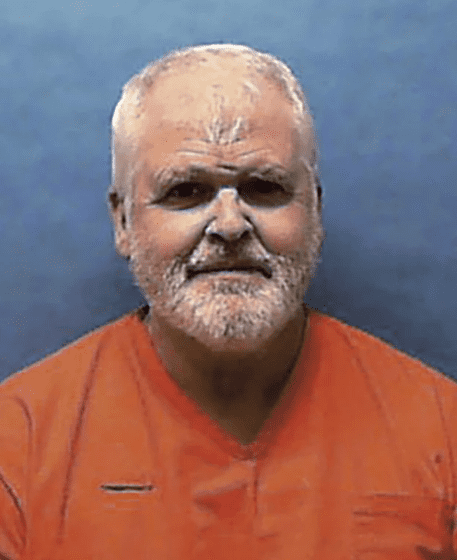
“I Just Shot My Family” Entire Family Murdered by Florida Veteran | Jeffrey Hutchinson
Jeffrey Hutchinson | PA MediaIt started with a chilling 911 call in the middle of the night. “Yes, ma’am... I just shot my family.” When police arrived, 35-year-old Jeffrey Hutchinson was lying in his garage, covered in blood and still holding the phone. Inside the...
Sources: (what the sources say)
https://en.wikipedia.org/wiki/Audrey_Marie_Hilley
https://law.justia.com/cases/alabama/court-of-appeals-criminal/1985/484-so-2d-476-0.html
https://www.nydailynews.com/2021/03/14/justice-story-a-black-widows-tangled-web/
https://www.latimes.com/archives/la-xpm-1987-02-27-mn-4087-story.html
And remember, sharing the episode with a friend is a free and easy way to support the show.
Catch this case while you’re here:
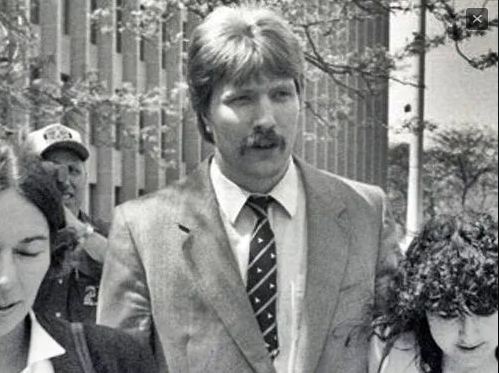
Man Drove Miles While Sleeping and Murdered In-Law | Sleepwalking Murder Case of Kenneth Parks
In 1987, Kenneth Parks walked into a police station and confessed to killing his in-laws, but later claimed he had been sleepwalking. A jury, and eventually the Supreme Court of Canada, agreed, finding him not guilty due to non-insane automatism. Listen to the full...
🔗 Get involved in the conversation for free:
LaM Fan Group
**********************************
HOW TO SUPPORT LOVE AND MURDER:
🧃Buy me a coffee (or an apple juice)🧃
Patreon (✨✨best option for more extras✨✨)
***********************************
Rate, Share, Subscribe!🌟🌟🌟🌟🌟
Want to hear about a specific true crime case?
Email me at [email protected]
or
Request here: https://forms.gle/K513K8wCdRbU6syz5
We’re listener-supported. That means you.
When you give, you’re not just supporting the podcast, you’re helping amplify the voices of those who’ve been silenced.
Get ad-free episodes, exclusive content, bonus episodes, and access to the full LaM Files.

Oregon Teen Heroically Saved a Baby from Electrocution – Majiah Washington
In a moment of bravery and selflessness, an 18-year-old teenager from Portland, Oregon, risked her life to save a baby from electrocution. Majiah Washington, a daycare worker, witnessed a tragic incident unfold during an ice storm in her neighborhood. A power line had...

Man Kills Girlfriend’s Parents Over COVID Social Distancing – Khari Sanford
Khari SandfordIn a case of domestic strife aggravated by the pressures of the COVID-19 pandemic, 21-year-old Khari Sanford from Wisconsin finds himself convicted for the brutal killing of Dr. Beth Potter and Robin Carre, parents of his girlfriend, Miriam Carre. Khari...
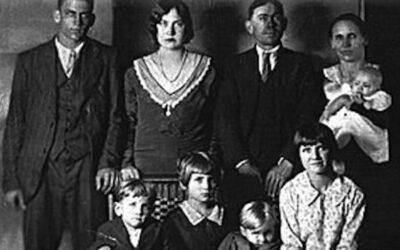
The Lawson Family’s Mysterious December Murder Tragedy – Charlie Lawson
December 25, 1929, in Germanton, North Carolina. The Lawson family, seemingly picture-perfect in their new clothes, posed for a family portrait. Charlie Lawson, the father and husband, had even managed to scrape together enough money during the Great Depression to buy...
Discover more from Love and Murder Podcast: Heartbreak to Homicide
Subscribe to get the latest posts sent to your email.